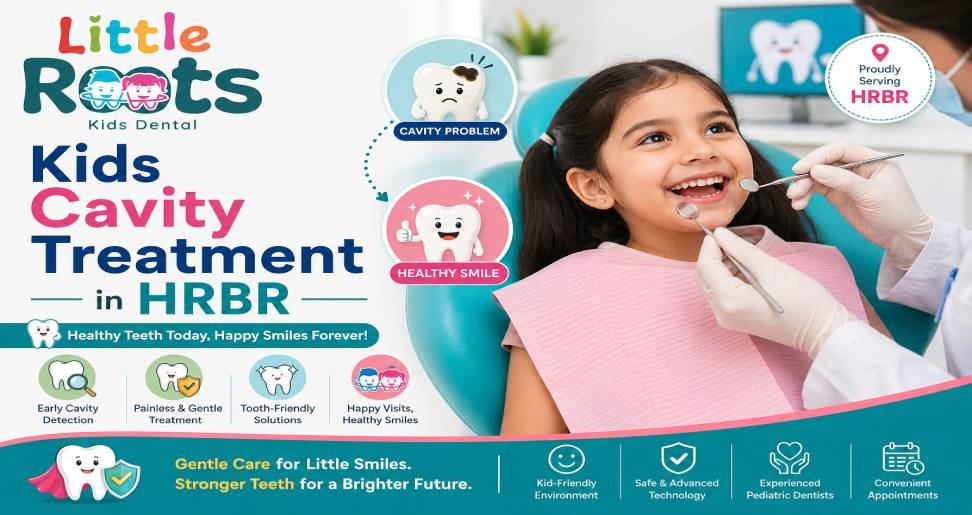
Kids don’t say “my tooth hurts” the way adults do. They just stop eating certain foods, chew on the other side, and carry on. By the time most parents in HRBR realise something’s off, the cavity has already had weeks, sometimes months, to quietly go deeper. That’s not a parenting failure. It’s just how it goes with kids and dental pain. But it does mean that what could’ve been a ten-minute filling at the right time becomes a more involved procedure later. Cavity treatment for kids, when caught early, is fast, simple, and prevents the need for more advanced tooth cavity treatment later.
Why Early Treatment Makes All the Difference
- Stops decay before it reaches the nerve
- Prevents infection from spreading to permanent teeth underneath
- Keeps the procedure short and far less stressful for the child
- Protects spacing and jaw development long term
When Does a Child Actually Need Cavity Treatment?
Not every sensitive tooth or dark spot is a cavity. Early tooth cavity treatment helps prevent deeper damage and more complex procedures.But certain signs mean it’s time to go inand waiting on them is where things get complicated. An early cavity shows up as a white or chalky patch on the enamel.At this stage, dental treatment for cavities can be as simple as a fluoride application, with no drilling or filling needed. Once it’s turned brown or black, decay has set in and a filling is needed.
If your child is waking up with pain, refusing food on one side, or you can see any swelling near the gum, that’s deeper decay, and it needs to be seen the same week. Baby teeth get written off more than they should. They’re holding space for the adult teeth coming in underneath. Lose one too early to decay and the neighbouring teeth drift, which leads to crowding and alignment issues that show up years later and cost significantly more to fix.
What the Procedure Actually Looks Like
For an early cavity, it’s straightforward. Clean the area, apply a tooth-coloured filling, done often within 20 to 30 minutes. Most kids barely register it happened. If decay has gone deeper toward the nerve, a pulpotomy is needed. The name sounds worse than it is. The affected pulp tissue is removed, the tooth is sealed, and a small crown goes on top to protect it. Children tolerate it better than parents anticipate, especially with a dentist who knows how to work with kids rather than just on them. Where a tooth is beyond saving, extraction with a space maintainer is the way forward. The maintainer holds the gap open, so the permanent tooth has room to come in correctly. Throughout all of it, numbing gel before the injection, a calm explanation of what’s happening, not talking over the child’s head, these things matter more than parents realise when it comes to how the child handles it.
What to Expect After
Simple fillings, nothing much to manage. Some numbness for an hour or two, watch that they don’t bite their cheek. That’s about it. After a pulpotomy or extraction, mild soreness for a day or two is normal. Eat soft foods, avoid chewing on that side, and take prescribed pain relief.
Most kids return to normal eating within three to four days. If swelling, increasing pain after day three, or fever occurs, contact the clinic.
Tips Worth Actually Following
- First dental visit should happen around age one, not when a problem shows up
- Say “check-up” when you explain it to your child, not “injection” or “filling”
- Ask ahead whether the dentist shows children the tools before using them. It matters more than most people think
- Night brushing matters more than morning brushing, decay does most of its work overnight
- Don’t skip follow-ups just because it looks fine. That’s exactly when things are easiest to catch
What Most Parents Don’t Think to Ask About
By the time one tooth has a visible cavity, others are usually in the early stages. A full check at the same visit picks those up while they’re still easy and cheap, to deal with. This is also the right time to ask about sealants and fluoride varnish. Sealants coat the grooves in the back teeth where most childhood cavities begin. Fluoride varnish strengthens enamel before decay gets a foothold. Both are painless, quick, and effective options that support tooth cavity natural treatment and prevention.
Frequently Asked Questions (FAQs) :-
Ans :- Yes. They hold space for adult teeth and support jaw development. Leaving them untreated causes pain, infection, and alignment problems down the line.
Ans :- The procedure isn’t. Local anaesthetic handles that. There may be mild soreness for a day or two after more involved procedures — nothing that paracetamol and soft food won’t sort.
Ans :- Simple fillings range from ₹800 to ₹2,000. Pulpotomy with crown placement runs higher depending on complexity. Ask for a full breakdown at the consultation before anything starts.
Ans :- Every six months. Every four if they’ve had cavities before.
Final Thoughts
Caught early, kids’ cavity treatment in HRBR is a short appointment and a non-event. Caught late, it’s more time, more cost, and a harder experience for your child. The difference is usually just a matter of not putting it off. Little Roots in HRBR sees children from their first check-up through to fillings, pulpotomies, and preventive treatments. If your child hasn’t been in a while or you’ve noticed something a consultation is twenty minutes and tells you exactly where things stand.
Have A Look :-