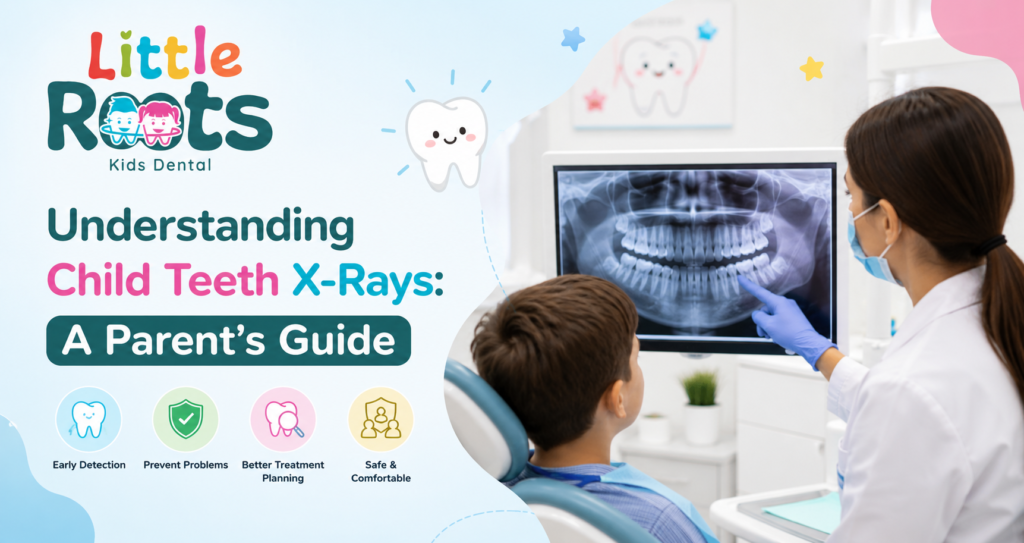
When a pediatric dentist recommends a dental X-ray, many parents have questions. Is it really necessary? Is it safe? What can an X-ray show that a regular dental check-up cannot?
Dental X-rays are an important part of preventive pediatric dentistry because they reveal problems hidden beneath the surface. They help dentists identify cavities, monitor tooth development, detect injuries, and evaluate jaw growth before issues become more serious.
With today’s digital imaging technology, dental X-rays expose children to only a very small amount of radiation and are recommended only when they are clinically necessary.
What Is a Child Teeth X-Ray?
A child teeth X-ray is a diagnostic image that allows dentists to examine areas that cannot be seen during a routine visual examination. It provides detailed images of the teeth, roots, jawbone, developing permanent teeth, and surrounding structures.
By identifying problems early, X-rays help make treatment more effective, less invasive, and often less expensive.
Why Might Your Child Need Dental X-Rays?
Children’s mouths change rapidly as baby teeth are replaced by permanent teeth. Because many dental issues develop below the gums or between teeth, X-rays are often needed to monitor healthy development.
A pediatric dentist may recommend X-rays to:
- Detect cavities between teeth
- Monitor the eruption of permanent teeth
- Identify impacted or missing teeth
- Diagnose infections or abscesses
- Evaluate dental injuries after accidents
- Assess jaw and bone development
- Assist with orthodontic treatment planning
The need for X-rays depends on your child’s oral health, symptoms, and risk of dental disease.
When Should Children Have Their First Dental X-Ray?
There is no universal age for a child’s first dental X-ray. Instead, dentists decide based on individual needs.
Many children have their first X-ray between the ages of 4 and 6, when they can comfortably cooperate during the procedure. However, earlier imaging may be recommended if a child has:
- Frequent cavities
- Tooth pain
- Dental trauma
- Delayed eruption of teeth
- Developmental concerns
Your dentist will determine the appropriate timing after evaluating your child’s oral health.
Common Types of Dental X-Rays for Children
Different X-rays serve different purposes.
Bitewing X-Rays
These images focus on the upper and lower back teeth and are commonly used during routine check-ups.
They help detect:
- Cavities between teeth
- Early bone changes
- Existing dental restorations
Periapical X-Rays
These images capture an entire tooth, including its root and surrounding bone.
They are useful for:
- Tooth infections
- Root problems
- Dental injuries
Panoramic X-Rays
A panoramic image shows the entire mouth, including both jaws and developing permanent teeth.
Dentists commonly use it to:
- Evaluate jaw development
- Check tooth eruption
- Plan orthodontic treatment
- Assess wisdom teeth
Occlusal X-Rays
Although less commonly used, these X-rays help identify developmental abnormalities, extra teeth, cysts, or other conditions affecting the mouth.
Are Dental X-Rays Safe for Children?
Yes. Modern digital dental X-rays use significantly less radiation than older film-based systems.
Pediatric dental clinics also follow strict safety measures, including:
- Digital imaging equipment
- Protective lead aprons
- Thyroid shielding when appropriate
- Minimal exposure times
- Taking X-rays only when clinically indicated
These precautions help keep radiation exposure as low as reasonably achievable while providing valuable diagnostic information.
When Are Dental X-Rays Recommended?
A dentist may recommend X-rays during routine visits or when investigating a specific concern.
During Preventive Check-Ups
Even healthy-looking teeth can develop problems that are not visible during an oral examination. X-rays help detect hidden cavities, monitor tooth development, and identify changes before symptoms appear.
After an Injury or When Pain Is Present
If your child experiences a fall, sports injury, swelling, or persistent tooth pain, X-rays allow the dentist to evaluate:
- Root fractures
- Tooth damage
- Jaw injuries
- Hidden infections
- Damage to developing permanent teeth
Prompt diagnosis supports faster and more appropriate treatment.
Signs Your Child May Need an X-Ray
Your dentist may suggest imaging if your child has:
- Persistent tooth pain
- Swollen gums or face
- Difficulty chewing
- Delayed tooth eruption
- Repeated cavities
- Dental trauma
- Crowded or misaligned teeth
- Concerns about jaw growth
Not every child with these symptoms will require an X-ray, but imaging can help determine the underlying cause.
What Happens During the Procedure?
Dental X-rays are quick, comfortable, and usually completed within a few minutes.
During the appointment:
- A protective apron is placed over your child.
- A small digital sensor is positioned inside the mouth.
- Your child remains still for a few seconds while the image is captured.
- The images appear instantly on a computer screen for the dentist to review.
The procedure is painless and requires no recovery time.
How Often Are Dental X-Rays Needed?
There is no fixed schedule for every child.
The frequency depends on factors such as:
- Age
- Risk of tooth decay
- Previous dental history
- Tooth development
- Orthodontic treatment
- Existing dental conditions
Children at higher risk of cavities may require X-rays more frequently than those with excellent oral health.
Helping Your Child Feel Comfortable
Parents can make the experience easier by:
- Explaining that the dentist is taking pictures of their teeth
- Using calm, positive language
- Scheduling appointments when the child is well-rested
- Remaining relaxed throughout the visit
- Praising your child after the procedure
Positive early experiences often help reduce dental anxiety in future appointments.
FAQs:
Can cavities develop without causing pain?
Yes. Early tooth decay often has no symptoms, which is why X-rays can be valuable for detecting hidden cavities.
Are X-rays necessary for baby teeth?
Baby teeth play an important role in guiding permanent teeth into place and supporting normal oral development. Imaging may be recommended when needed to monitor their health.
Can dental X-rays help identify orthodontic concerns?
Yes. X-rays allow dentists to evaluate tooth positioning, jaw growth, and the development of permanent teeth, making them useful when planning orthodontic care.
Does every child need dental X-rays?
No. Dentists recommend X-rays based on each child’s age, oral health, symptoms, and risk of dental disease rather than following a standard schedule.
Why Early Diagnosis Is Important
Many dental problems begin below the surface before they become visible or painful. Identifying these issues early allows for simpler treatment, helps prevent complications, and supports healthy oral development as your child grows.
Regular dental check-ups, combined with X-rays when clinically indicated, provide a more complete picture of your child’s oral health.
Why Choose Little Roots Dental Clinic?
At Little Roots Dental Clinic, we provide gentle, child-focused dental care using advanced digital imaging technology. Our team is committed to creating a comfortable environment while ensuring accurate diagnosis with minimal radiation exposure.
Whether your child needs a routine examination, evaluation for tooth pain, or an orthodontic assessment, we provide personalized care tailored to every stage of development.
Schedule Your Child’s Dental Visit
If your child is due for a dental check-up, has experienced a dental injury, or is showing signs of tooth pain, early evaluation can help prevent more complex problems.
Book an appointment with Little Roots Dental Clinic and give your child the foundation for a lifetime of healthy smiles.
Read More: