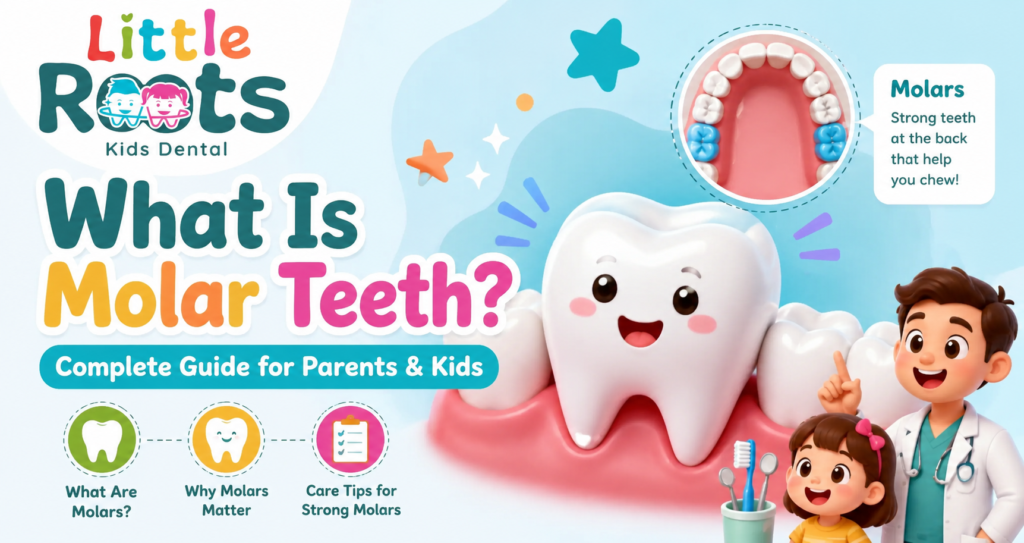
When your child starts getting bigger teeth at the back of their mouth, you may hear the dentist mention “molars.” Many parents often ask, “What is molar teeth?” and why these teeth are so important for their child’s oral health.
Molars play a crucial role in chewing food, supporting jaw development, and maintaining proper alignment of other teeth. Whether your child is getting their first permanent molars or experiencing discomfort from erupting molars, understanding these teeth can help you make informed decisions about their dental care.
In this guide, we’ll explain everything you need to know about molar teeth, their function, common problems, and how to keep them healthy for life.
What Is Molar Teeth?
Molars are the large, flat teeth located at the back of the mouth. They are specifically designed to grind, crush, and chew food before swallowing. Unlike the front teeth, which are used for biting and tearing, molars do the heavy work of breaking down food into smaller pieces.
Most adults have 12 molars, including wisdom teeth. Children initially develop primary molars, which are eventually replaced by permanent molars as they grow.
Types of Molars
There are three main types of molars:
1. First Molars
Often called the “six-year molars,” these are usually the first permanent teeth to appear behind the baby teeth.
2. Second Molars
These emerge around the age of 11 to 13 years and provide additional chewing strength.
3. Third Molars (Wisdom Teeth)
Wisdom teeth generally erupt between the ages of 17 and 25, although some people never develop them.
What Is a Molar in Your Tooth?
A molar is a specialized tooth with a broad chewing surface and multiple roots. The top surface contains grooves and cusps that help grind food efficiently.
Molars are among the strongest teeth in the mouth because they handle significant chewing pressure every day.
Key Features of Molars
- Wide and flat chewing surface
- Strong enamel layer
- Multiple roots for stability
- Located at the back of the mouth
- Designed for grinding and crushing food
Without healthy molars, eating many foods comfortably becomes difficult.
Why Are Molars Important?
Molars do much more than simply chew food.
Help with Digestion
Proper chewing breaks food into smaller pieces, making digestion easier and more efficient.
Support Jaw Development
In children, molars contribute to healthy jaw growth and development.
Maintain Tooth Alignment
Molars help preserve spacing and alignment throughout the mouth.
Improve Speech
Proper tooth structure supports clear pronunciation and speech development.
Enhance Facial Structure
Healthy molars provide support to facial muscles and help maintain natural facial appearance.
When Do Molars Come In?
Parents often wonder when their child’s molars should appear.
Baby Molars Timeline
| Age | Tooth Development |
|---|---|
| 13–19 Months | First baby molars |
| 23–33 Months | Second baby molars |
Permanent Molars Timeline
| Age | Tooth Development |
| 6–7 Years | First permanent molars |
| 11–13 Years | Second permanent molars |
| 17–25 Years | Wisdom teeth |
The first permanent molars are especially important because they erupt without replacing a baby tooth, making them more susceptible to cavities if not properly cared for.
Are Molar Teeth More Painful?
One of the most common questions parents ask is: “Are molar teeth more painful?”
The answer is that molars can sometimes cause more discomfort during eruption because they are larger and emerge through thicker gum tissue.
Common Symptoms During Molar Eruption
- Swollen gums
- Tenderness at the back of the mouth
- Increased drooling
- Mild irritability
- Difficulty chewing
- Sensitivity to hot or cold foods
Children may complain about soreness for a few days or weeks as the molars gradually emerge.
When to See a Dentist
Consult a pediatric dentist if your child experiences:
- Severe pain
- Persistent swelling
- Fever
- Difficulty opening the mouth
- Signs of infection
These symptoms may indicate a dental issue requiring professional attention.
Common Problems Associated with Molars
Because molars have deep grooves and pits, they are particularly vulnerable to dental problems.
Tooth Decay
Food particles can easily become trapped in molar grooves, increasing cavity risk.
Gum Infections
Poor oral hygiene can lead to inflammation around molars.
Impacted Wisdom Teeth
Some third molars become trapped beneath the gums or emerge at an angle.
Cracked Molars
The constant pressure from chewing can sometimes cause molars to crack or fracture.
Misalignment
Improper eruption can affect overall bite alignment and oral function.
What Happens If I Lose a Molar?
Another common concern is: “What happens if I lose a molar?”
Losing a molar can have significant effects on oral health.
Difficulty Chewing
Molars perform most of the grinding function during eating. Their absence can make chewing harder.
Teeth Shifting
Neighboring teeth may gradually move into the empty space.
Bite Problems
Missing molars can alter your bite and jaw alignment.
Increased Wear on Other Teeth
Remaining teeth may experience additional stress and wear.
Bone Loss
The jawbone beneath the missing tooth may gradually shrink over time.
For these reasons, dentists often recommend replacing lost permanent molars when possible.
Can Molar Teeth Be Removed?
Yes, molar teeth can be removed when necessary.
Common Reasons for Molar Extraction
- Severe tooth decay
- Advanced infection
- Impacted wisdom teeth
- Orthodontic treatment requirements
- Extensive tooth damage
- Gum disease
However, dentists generally try to save natural molars whenever possible through treatments such as fillings, crowns, or root canals.
Is Molar Removal Safe?
Molar extraction is a common dental procedure that is generally safe when performed by an experienced dental professional. Recovery typically takes a few days to a week, depending on the complexity of the extraction.
How to Keep Molars Healthy
Protecting molars is essential for long-term oral health.
Brush Thoroughly
Brush twice daily using fluoride toothpaste, paying special attention to the back teeth.
Floss Every Day
Flossing removes plaque and food particles between molars.
Consider Dental Sealants
Sealants create a protective barrier over molar grooves and significantly reduce cavity risk.
Limit Sugary Foods
Reducing sugar intake helps prevent tooth decay.
Schedule Regular Dental Visits
Routine dental checkups allow early detection and treatment of potential issues.
Encourage Healthy Eating
A balanced diet rich in calcium and vitamins supports strong teeth and healthy gums.
FAQs:
What is molar teeth?
Molars are the large teeth located at the back of the mouth that help grind and chew food efficiently.
What is a molar in your tooth?
A molar is a specialized chewing tooth with a broad surface and multiple roots designed for crushing food.
Are molar teeth more painful?
Molars can sometimes be more uncomfortable during eruption because of their size and position in the mouth.
What happens if I lose a molar?
Losing a molar can affect chewing ability, tooth alignment, bite function, and jawbone health.
Can molar teeth be removed?
Yes, molars can be extracted when necessary due to decay, infection, impaction, or orthodontic treatment needs.
Conclusion
Understanding what is molar teeth and why they matter is essential for maintaining excellent oral health throughout life. Molars are the powerhouse teeth responsible for chewing, supporting jaw development, and preserving proper tooth alignment.
For children, the arrival of permanent molars marks an important milestone in dental development. With proper oral hygiene, regular dental checkups, and preventive care, these valuable teeth can remain healthy and functional for decades.
At Little Roots Kids Dental, we believe that educating parents is the first step toward creating healthy smiles. If you have questions about your child’s molars, tooth eruption, or preventive dental care, our pediatric dental team is here to help.
Read More: