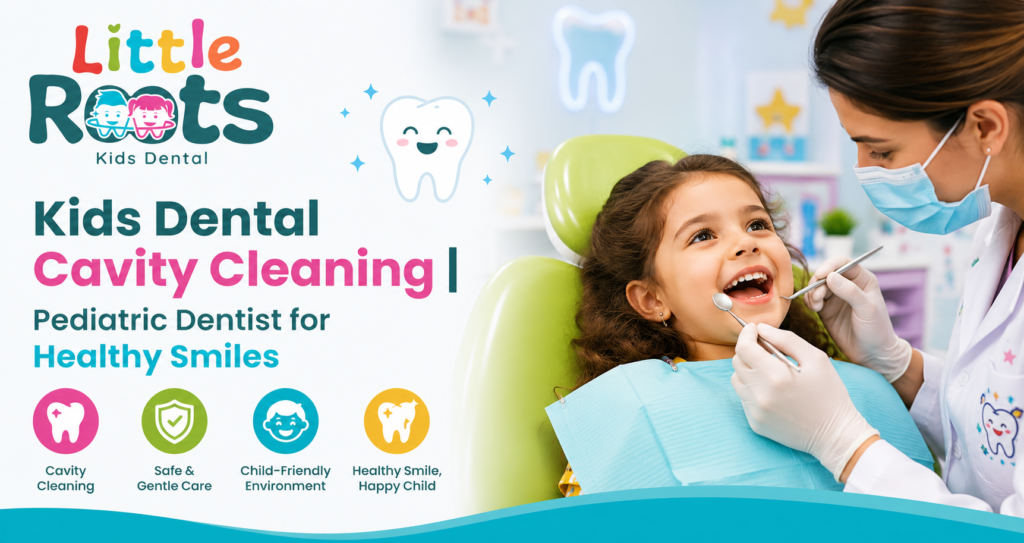
Hearing that your child has a cavity can leave you with many questions. Is it serious? Does it need treatment if it’s only a baby tooth? Will the procedure hurt? These concerns are common among parents, especially when it is their child’s first dental visit.
The truth is that cavities in children should never be ignored. Baby teeth play an important role in eating, speech development, and maintaining space for permanent teeth. A small cavity that is treated early is usually simple to manage, while delaying treatment may lead to pain, infection, or even early tooth loss.
Professional cavity cleaning is a safe and effective way to remove tooth decay and restore your child’s oral health. At Little Roots Dental Clinic, we focus on gentle pediatric dentistry that keeps children comfortable while protecting their growing smiles.
What Is Dental Cavity Cleaning for Children?
Dental cavity cleaning is a conservative treatment that removes the damaged part of a tooth affected by decay. Once the unhealthy portion is removed, the tooth is rebuilt using a durable filling material that blends naturally with the tooth.
The goal is not only to stop the cavity from spreading but also to preserve the natural tooth until it is ready to fall out on its own.
Since children’s enamel is thinner than adult enamel, decay can spread quickly. Early treatment helps avoid more complex procedures such as pulp therapy or tooth extraction.
Why Are Cavities So Common in Children?
Childhood cavities develop when bacteria in the mouth combine with sugars from food and drinks. These bacteria produce acids that gradually weaken the tooth surface.
Several everyday habits increase the risk:
- Frequent snacking between meals
- Sugary drinks, chocolates, and candies
- Brushing too quickly or irregularly
- Sleeping after drinking milk or juice
- Sticky foods remaining on teeth
- Missed dental checkups
- Deep grooves in newly erupted molars
Many parents believe cavities happen because children eat sweets occasionally. In reality, the frequency of sugar exposure and poor oral hygiene together create the perfect environment for tooth decay.
Early Signs That Shouldn’t Be Ignored
Tooth decay often begins silently before pain develops.
Watch for these warning signs:
- White chalky patches on teeth
- Brown or black discoloration
- Small holes or pits
- Complaints of sensitivity
- Pain while chewing
- Bad breath that doesn’t improve after brushing
- Swollen gums around a tooth
- Food repeatedly getting stuck in one area
If any of these symptoms appear, scheduling a dental examination promptly can prevent further damage.
What Happens During Kids Dental Cavity Cleaning?
Many children—and parents—feel nervous before treatment. Knowing what happens can make the experience less stressful.
Examination
The dentist carefully checks every tooth and may recommend digital X-rays to determine how deep the cavity has progressed.
Removing the Decay
Only the unhealthy part of the tooth is removed while preserving as much healthy tooth structure as possible.
Restoring the Tooth
The cleaned tooth is repaired using a strong, tooth-colored filling designed for children.
Bite Check
Finally, the dentist ensures the filling feels comfortable and allows your child to chew normally.
Most early cavities are completed during a single visit.
How to Clean a Kids Cavity?
This is one of the most common questions parents search online.
Unfortunately, once a cavity has formed, it cannot be cleaned at home.
Brushing, flossing, and mouthwash remove food particles and plaque, but they cannot eliminate damaged tooth tissue. Trying home remedies or delaying treatment only allows the decay to progress deeper into the tooth.
Instead, parents should:
- Schedule a pediatric dental appointment promptly.
- Help the child brush twice daily with fluoride toothpaste.
- Reduce sugary snacks and sweetened beverages.
- Encourage rinsing with water after meals.
- Follow the dentist’s preventive care advice after treatment.
Professional cavity cleaning remains the safest and most effective solution.
What Age Should Kids Get Dental Cleaning?
Preventive dental care should begin much earlier than many parents expect.
Children should visit a dentist by their first birthday or within six months after the first tooth appears.
Professional cleanings are generally recommended every six months. These visits remove plaque buildup, monitor tooth development, and allow dentists to detect tiny cavities before they become painful.
Children with a higher risk of tooth decay may benefit from more frequent preventive visits based on the dentist’s recommendation.
Is It Normal for a 5-Year-Old to Have a Cavity?
Although cavities are common among preschool-aged children, they should never be considered a normal part of growing up.
At age five, children are still developing lifelong oral hygiene habits. Cavities at this stage usually result from prolonged sugar exposure, ineffective brushing, or inconsistent dental visits.
Treating cavities early helps children:
- Eat comfortably
- Sleep without tooth pain
- Maintain proper speech development
- Protect the health of permanent teeth
- Avoid emergency dental treatment
Early intervention also creates a more positive dental experience than waiting until pain becomes severe.
Why Baby Teeth Deserve Proper Care
Some parents believe baby teeth don’t require treatment because they eventually fall out.
In reality, healthy baby teeth are essential because they:
- Guide permanent teeth into the correct position
- Support jaw development
- Help children chew nutritious foods
- Assist with clear speech
- Build confidence through healthy smiles
Losing baby teeth too early may lead to crowding, bite problems, and future orthodontic concerns.
Everyday Habits That Help Prevent Cavities
Preventing cavities is easier than treating them.
Parents can encourage healthy smiles by:
- Brushing morning and night for two minutes
- Using age-appropriate fluoride toothpaste
- Replacing toothbrushes every three months
- Limiting sugary snacks between meals
- Choosing water over sugary beverages
- Including calcium-rich foods in daily meals
- Scheduling regular dental checkups
- Asking about fluoride applications and dental sealants
Consistent home care combined with professional dental visits offers the best protection against tooth decay.
When Should You Schedule a Dental Visit?
Don’t wait for severe tooth pain.
Arrange an appointment if your child experiences:
- Persistent sensitivity
- Visible holes in teeth
- Toothache
- Swollen gums
- Difficulty chewing
- Tooth discoloration
- Chipped or broken fillings
Routine checkups remain the most effective way to catch dental problems before they become emergencies.
Why Families Choose Little Roots Dental Clinic
Children deserve dental care that feels reassuring rather than frightening.
At Little Roots Dental Clinic, every appointment is designed with young patients in mind. Our team combines modern techniques with a gentle approach to help children feel relaxed throughout their visit.
Parents choose our clinic because we offer:
- Experienced pediatric dental professionals
- Child-friendly treatment techniques
- Tooth-colored restorations
- Modern diagnostic technology
- Preventive oral health education
- Personalized care plans for every child
Our goal is not only to treat cavities but also to help children develop healthy dental habits for life.
FAQs:
Can a cavity disappear by itself?
No. Once the tooth structure is damaged, professional treatment is needed to stop the decay.
Is cavity cleaning painful?
Most children tolerate the procedure very well. Dentists use gentle techniques to ensure the experience is as comfortable as possible.
How long does treatment usually take?
Small cavities are often treated within 20 to 40 minutes, depending on the child’s cooperation and the size of the cavity.
Can children eat after cavity treatment?
Yes. Your dentist will advise when eating is safe based on the filling material used.
How can parents reduce the chance of future cavities?
Healthy eating habits, regular brushing, fluoride protection, and routine dental checkups are the best ways to lower cavity risk.
Final Thoughts
A healthy smile begins with prevention, but early treatment is just as important when cavities develop. Ignoring a small cavity can lead to discomfort, infection, and more complicated dental procedures later.
Professional cavity cleaning helps preserve your child’s natural teeth while supporting healthy growth and development. By combining regular dental visits with good home care, parents can give their children the best chance of maintaining strong, cavity-free smiles.
If you notice any signs of tooth decay, schedule a visit to Little Roots Dental Clinic. Early care today can prevent bigger dental problems tomorrow.
Read More: