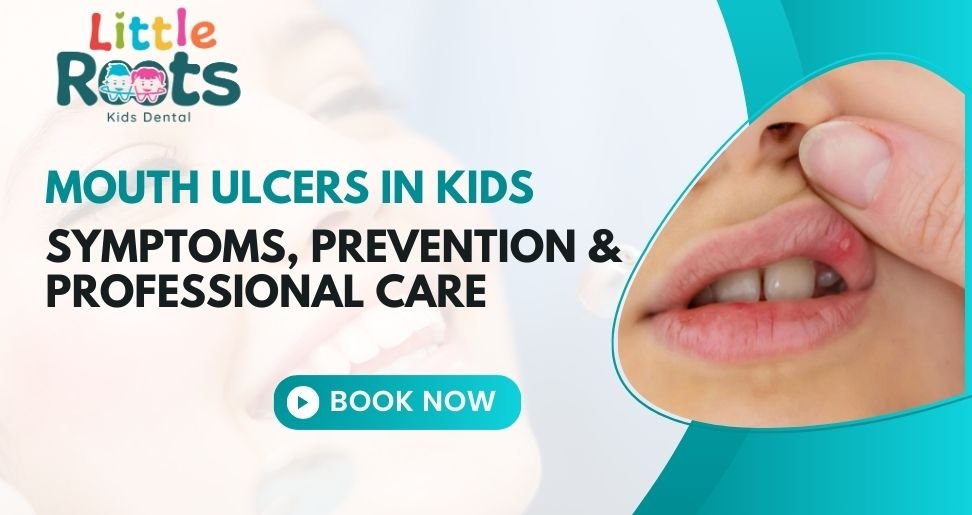
Your little one woke up crying this morning. They won’t eat their favourite cereal. You peek inside their mouth and there it is – a tiny white sore with angry red edges on their inner cheek. It’s a mouth ulcer, and your poor child is clearly hurting.
We’ve been there as parents. That helpless feeling when your kid is in pain. The good news? Mouth ulcers, while painful, are super common and usually nothing serious.
What Are Mouth Ulcers?
Think of mouth ulcers like tiny craters inside your child’s mouth. They’re also called canker sores. You’ll spot them on the inside of their cheeks, lips, tongue, or gums. They look like small white or yellow circles with red, angry edges.
Here’s something important – your child didn’t catch this from anyone. Mouth ulcers aren’t contagious at all. You don’t need to keep them home or worry about siblings catching it.
Why Does Your Child Get These?
They Bit Their Cheek: Kids eat like they’re in a race. They’re talking, laughing, and suddenly – chomp – they bite the inside of their cheek. That injury turns into an ulcer within a day or two.
Sharp Food: Those sharp edges on chips? Or crusty bread? They scratch the soft inside of your child’s mouth. These tiny cuts develop into painful ulcers. We see this happen especially with hard biscuits and crackers.
Certain Foods: Some kids are sensitive to oranges, lemons, tomatoes, or spicy curries. These can trigger ulcers. Every child is different – what bothers one might be fine for another.
Stress or Tiredness: Big test coming up? Not enough sleep? When kids are run down, their defenses drop and ulcers pop up. We often notice more ulcers during exam season.
Missing Vitamins: Picky eaters might be missing vitamin B12, iron, folic acid, or zinc. When these are low, ulcers show up more often.
Braces: Metal brackets rub against the soft parts of their mouth constantly, creating sores. We understand how uncomfortable this can be for kids adjusting to new braces.
Signs that Your Child May Have an Ulcer
Chances are that your child will complain of a sore mouth before you will ever see the sore. They’ll turn down all their favourite foods, including ones that they would usually devour. When you look in your child’s mouth, you will see a distinct white/yellow coloured ulcer surrounded by red in the area. The area may be swollen and puffy as well. If your children are very young, they may drool because of the pain involved in swallowing. You will probably also notice a change in your child’s behaviour (ie crankiness).
How to Cure an Ulcer for Kids
Saltwater Rinse: Swish warm salt water after meals to clean the ulcer and help it heal.
Ice Relief: Ice chips or popsicles numb pain and soothe discomfort.
Soft Foods: Give yogurt, mashed foods, smoothies, or soft rice. Avoid spicy, crunchy, or acidic foods.
Pharmacy Gel: Ask for mouth ulcer gel for kids. Dab it on the ulcer – it creates a protective coating. Pain relief lasts for hours. We recommend keeping this handy at home.
Try Honey: If your child is over one year old, dab pure honey on the ulcer three or four times daily. Honey is naturally antibacterial. Never give honey to babies under 12 months.
Pain Medicine: If they’re really suffering, give paracetamol or ibuprofen. Follow the dosage for their age.
Most ulcers we see are completely gone within a week. Some take up to ten days.
How to Prevent Mouth Ulcers in Kids
Brushing: Gentle Brushing – Use a gentle toothbrush. Teach to lightly brush to help prevent problems in the mouth.
Healthy Eating: Provide fruits, vegetables, whole grains, eggs, milk, chicken, & fish to give the vitamins needed.
Avoidance: If ulcers show up within a short time after eating certain foods or after certain events, then don’t feed those foods or allow those events.
Hydration: Drink plenty of water throughout the day – provide a water bottle to assist.
Sleep: Children need 8 to 10 hours of sleep every night.
Deal with Braces: Ask Little Roots Dental for dental wax. Put it over sharp brackets so they don’t rub.
What Works Best for Prevention?
Two things make the biggest difference: good food and clean teeth. Kids who eat properly and brush correctly just don’t get ulcers as often. We’ve seen this work time and again.
Pay attention to your child’s patterns. Ulcers during exams? After sleepovers? After fast food? Once you know the triggers, you can do something about it.
When to See a Dentist
Take your child to Little Roots Dental if:
- The ulcer is still there after two weeks
- They have multiple big ulcers at once
- They have a fever with the ulcer
- Pain is so bad they won’t eat or drink
- Ulcers keep coming back every few weeks
We’re here to help when home remedies aren’t enough.
Quick Questions Parents Ask
Are they contagious? Nope. Let your kids share food normally.
What about toothpaste? Try SLS-free toothpaste if your child gets frequent ulcers. We’ve seen this make a real difference.
How long do they last? Usually a week to ten days.
Final Thoughts
Mouth ulcers are painful but don’t last long. Help your child feel better with salt rinses, soft foods, ice, and gels, and be patient while they heal.
Healthy food and good dental care can help prevent ulcers from coming back. If you’re worried or they happen often, book a visit with Little Roots Dental. Our pediatric dental experts will guide you.
Your child will soon be back to eating, smiling, and playing as usual. It will get better.
Have A Look :-