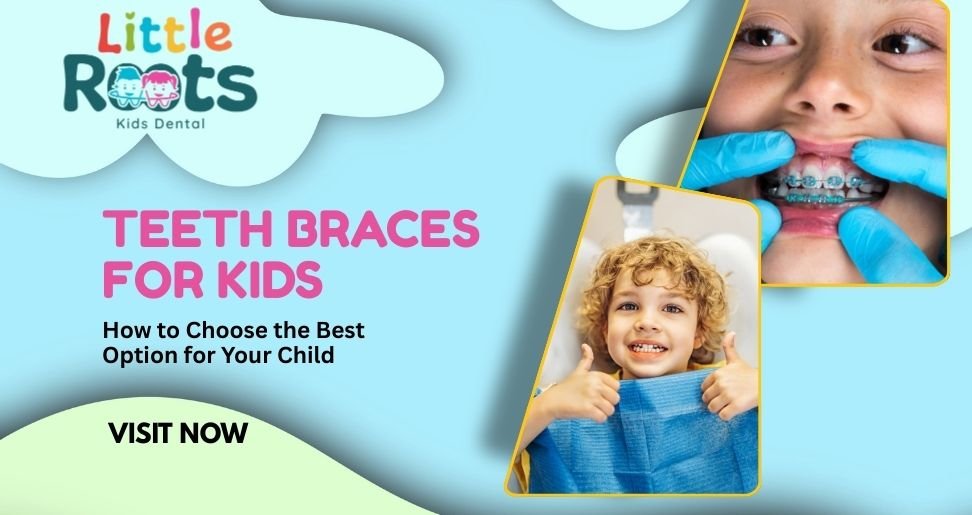
When it comes to your child’s smile, every parent wants the very best. Crooked teeth, gaps, or bite problems can affect not only appearance but also speech, chewing, and confidence. That’s why teeth braces are one of the most common and effective orthodontic treatments for children today.
At Little Roots Dental Clinic, we understand that choosing braces for your child can feel overwhelming. With multiple options available and so much information online, parents often ask:
- Which type of braces are best for kids?
- What is the best age to put braces on a child?
- How to choose the right type of teeth braces?
- What are the 5 stages of braces?
In this comprehensive guide, we’ll answer all your questions and help you make the right decision for your child’s healthy, confident smile.
Why Do Kids Need Teeth Braces?
Children may need braces to correct:
- Crowded or overlapping teeth
- Gaps between teeth
- Overbite or underbite
- Crossbite
- Jaw alignment issues
- Early or late loss of baby teeth
Braces do more than straighten teeth — they improve oral health, reduce the risk of cavities and gum disease, and help your child bite and chew properly.
What Is the Best Age to Put Braces on a Child?
Most children get braces between 9 and 14 years old. This age is ideal because:
- Permanent teeth have mostly erupted
- Jaw bones are still growing
- Teeth respond faster to alignment treatment
However, orthodontic evaluation should begin around age 7. Early screening allows dentists to detect issues before they become severe.
Why Early Evaluation Matters
Even if your child doesn’t need braces immediately, early assessment can:
- Prevent complicated future treatments
- Guide jaw development
- Reduce treatment duration later
Every child is different. The best age for braces depends on their dental development, not just their birth date.
Which Type of Braces Are Best for Kids?
There isn’t a “one-size-fits-all” answer. The best type of teeth braces depends on your child’s dental condition, lifestyle, and comfort level.
Let’s explore the most popular options:
1. Metal Braces (Traditional Braces)
Best for: Moderate to severe alignment issues
Metal braces are the most common and reliable option. They use stainless steel brackets and wires to gradually shift teeth into position.
Advantages:
- Highly effective
- Durable
- Often the most affordable
- Kids can choose colorful rubber bands
Considerations:
- Visible appearance
- Mild discomfort after adjustments
For many children, traditional metal braces remain the best and safest option.
2. Ceramic Braces
Best for: Kids concerned about appearance
Ceramic braces work like metal braces but use tooth-colored or clear brackets, making them less noticeable.
Advantages:
- More discreet
- Effective for complex cases
Considerations:
- Slightly more expensive
- Brackets can stain if oral hygiene is poor
These are ideal for older kids and teens who feel self-conscious about visible braces.
3. Clear Aligners (Invisalign for Kids)
Best for: Mild to moderate cases and responsible children
Clear aligners are removable, transparent trays that gradually move teeth.
Advantages:
- Nearly invisible
- Removable for eating and brushing
- More comfortable
Considerations:
- Must be worn 20–22 hours daily
- Not suitable for severe bite problems
- Higher cost
Aligners are excellent for disciplined kids who can follow instructions carefully.
How to Choose the Right Type of Teeth Braces?
Choosing the right braces involves balancing clinical needs, comfort, lifestyle, and budget.
Here’s a simple decision guide:
1. Consider the Severity of the Problem
- Severe crowding or bite issues → Metal braces
- Mild spacing or cosmetic concerns → Aligners or ceramic
2. Evaluate Your Child’s Responsibility Level
If your child may forget to wear aligners consistently, fixed braces are a better choice.
3. Think About Lifestyle
- Plays contact sports?
- Plays musical instruments?
- Sensitive about appearance?
4. Budget and Insurance Coverage
Traditional braces are often more cost-effective.
5. Get Professional Guidance
A pediatric dental consultation ensures you choose the safest and most effective option.
What Are the 5 Stages of Braces?
Parents often wonder what the braces journey looks like. Here are the five main stages:
Stage 1: Orthodontic Consultation & Diagnosis
- Dental examination
- X-rays and impressions
- Treatment planning
- Cost and timeline discussion
This stage determines whether your child truly needs teeth braces and which type is best.
Stage 2: Placement of Braces
- Cleaning teeth
- Bonding brackets
- Inserting archwire
- First adjustment
This appointment usually takes 1–2 hours.
Stage 3: Adjustment & Active Treatment
- Regular visits every 4–8 weeks
- Wire tightening
- Monitoring progress
This is the longest stage and typically lasts 12–24 months, depending on complexity.
Stage 4: Removal of Braces
- Brackets removed
- Teeth polished
- Final impressions taken
This is the most exciting day for kids!
Stage 5: Retention Phase
- Retainers provided
- Prevents teeth from shifting back
Retention is just as important as the braces phase. Without it, teeth may relapse.
FAQs:
Are braces painful for kids?
Mild discomfort is normal for 3–5 days after adjustments. Over-the-counter pain relief and soft foods help manage it.
How long do kids need to wear braces?
Most treatments last between 18 and 24 months, but some cases may be shorter or longer.
Can kids eat normally with braces?
Yes, but they should avoid:
- Sticky candies
- Hard nuts
- Popcorn
- Chewing gum
Soft foods are recommended during the first week.
Do braces affect speech?
Temporary changes in speech may occur, especially with aligners, but children adapt quickly.
How much do teeth braces cost for kids?
The cost depends on:
- Type of braces
- Treatment duration
- Severity of dental issue
- Location of clinic
A personalized consultation provides accurate pricing.
Signs Your Child May Need Braces
Watch for these early warning signs:
- Mouth breathing
- Thumb sucking beyond age 5
- Early or late loss of baby teeth
- Difficulty chewing
- Teeth that don’t meet properly
- Crowded or overlapping teeth
If you notice any of these, schedule an orthodontic evaluation.
Benefits of Early Orthodontic Treatment
Early braces can:
- Improve facial symmetry
- Boost self-confidence
- Prevent complex surgeries later
- Reduce risk of trauma to protruding teeth
- Improve overall oral hygiene
Starting at the right time makes treatment smoother and more effective.
How to Prepare Your Child for Braces
Parents play a huge role in ensuring a positive braces experience.
Here’s how you can help:
- Explain the benefits in simple terms
- Show before-and-after smile transformations
- Encourage good brushing habits
- Create a braces-friendly meal plan
- Celebrate milestones during treatment
A supportive approach makes the process exciting rather than stressful.
Oral Care Tips During Braces Treatment
Proper hygiene is crucial during orthodontic treatment.
Your child should:
- Brush after every meal
- Use a soft-bristled toothbrush
- Floss daily with orthodontic floss
- Rinse with fluoride mouthwash
- Visit the dentist regularly
Good oral hygiene prevents white spots, cavities, and gum problems.
Why Choose Little Roots Dental Clinic for Your Child’s Braces?
At Little Roots Dental Clinic, we focus on:
- Child-friendly environment
- Advanced orthodontic technology
- Personalized treatment plans
- Gentle and compassionate care
- Transparent communication with parents
Our goal is not just straight teeth, but confident smiles that last a lifetime.
Final Thoughts: Making the Right Choice for Your Child
Choosing the right teeth braces for your child is a major decision — but it doesn’t have to be stressful. With early evaluation, expert guidance, and the right treatment plan, your child can enjoy a smooth orthodontic journey.
To summarize:
- Best age for braces: Around 9–14 years
- Best type of braces: Depends on severity and lifestyle
- 5 stages of braces: Consultation, placement, adjustments, removal, retention
- Most important factor: Professional orthodontic assessment
A beautiful smile starts with the right foundation. If you’re wondering “Which type of braces are best for kids?” or “How to choose the right type of teeth braces?”, the best next step is scheduling a consultation.
Because every child deserves a healthy, confident smile.
Read More: